50-Foot Radius Concrete Water Tank Foundation in Milpitas
When you drive up into the Milpitas hills, you already know you’re in for a view. But this spot right here — you can see all of Silicon Valley at once. And this is where we built a brand-new 209,000-gallon water tank foundation for the City of Milpitas. This tank is mainly for fire protection, so there’s really no room for mistakes. Everything has to be clean, well-structured, and intentional.
Full Project Photos:
👉https://tinyurl.com/milpitasagriculturalshed
YouTube Video For This Project:
👉 https://bit.ly/50FootWaterTankGradeBeam
Setting Up a Large Circular Foundation on a Milpitas Hillside
Excavation, Grading, and Layout
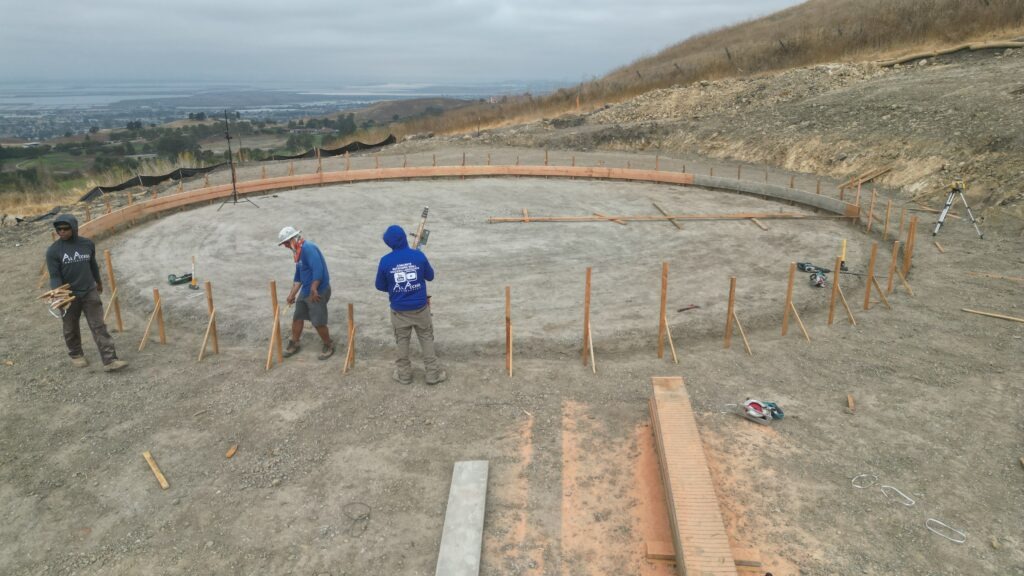
We first carved out a flat, workable pad large enough to accommodate the tank and all accessory foundations. Once that was done, we laser-leveled the entire area so the ring would sit perfectly accurate. You can’t start a circle until the base is perfect.
Why a 50-Foot Radius Requires Precision
This isn’t just a circle — it’s a structural tank system that supports over 1.7 million pounds of water when full. Every inch matters, and every form board has to land just right.
Challenges on the Hillside
Between the wind and the slope, we had to constantly check levels and alignment. But the view didn’t hurt — watching the city from up here almost makes you forget you’re working.
👉https://tinyurl.com/milpitasagriculturalshed
👉https://tinyurl.com/milpitasagriculturalshed
Formwork and Reinforcement for a True Structural Tank Base
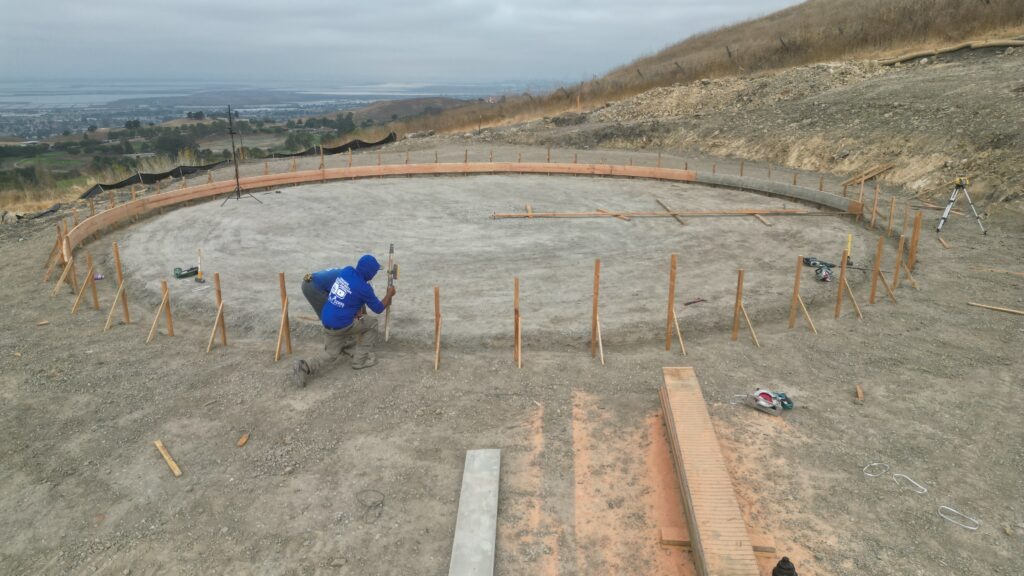
This is where the craftsmanship shows up. Anyone can pour concrete. Not everyone can build a perfect 100-foot diameter circle.
Curved Form Setup
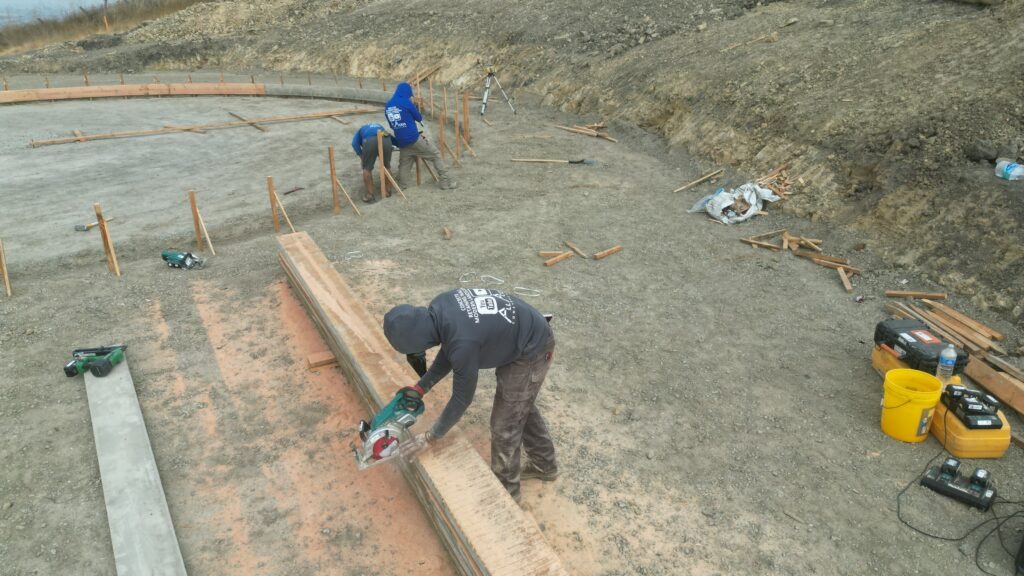
We built the radius using 2x12s, cutting each board about 1.5 inches to achieve the exact curve. It took a total of seven 2×12 arcs to wrap the entire ring. That curve looks smooth in photos — but trust me, you earn it.
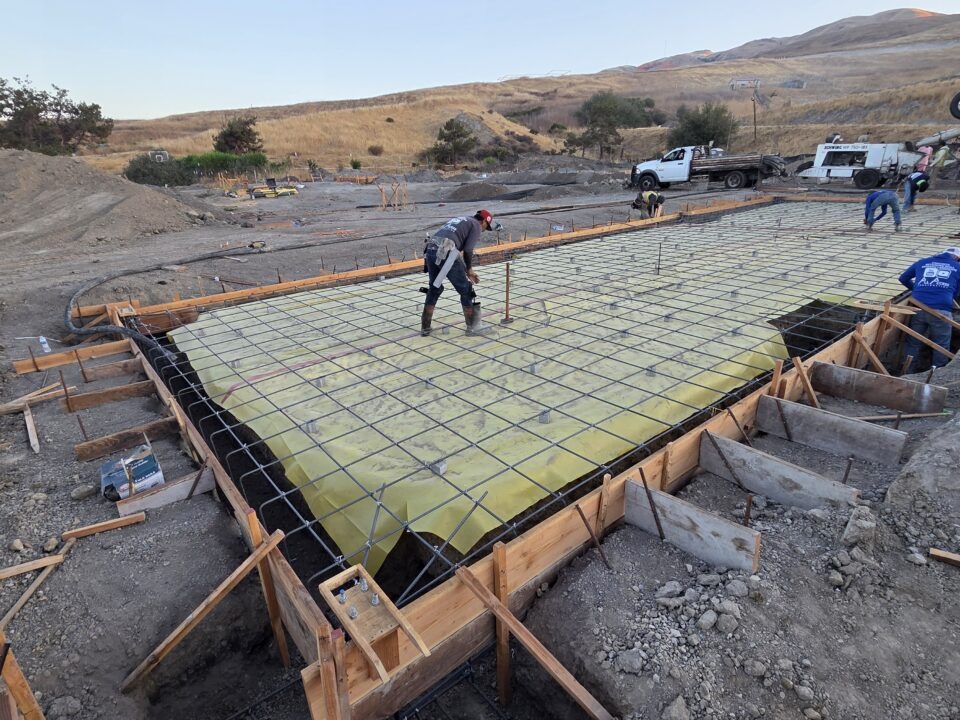
Rebar Placement and Spacing
Inside the form, we ran:
- #3 stirrups @ 12 inches on center
- (2) #5 rebars top
- (2) #5 rebars bottom
That’s the type of reinforcement you need when the tank is holding over 200,000 gallons.
Keeping the Radius Perfectly Round
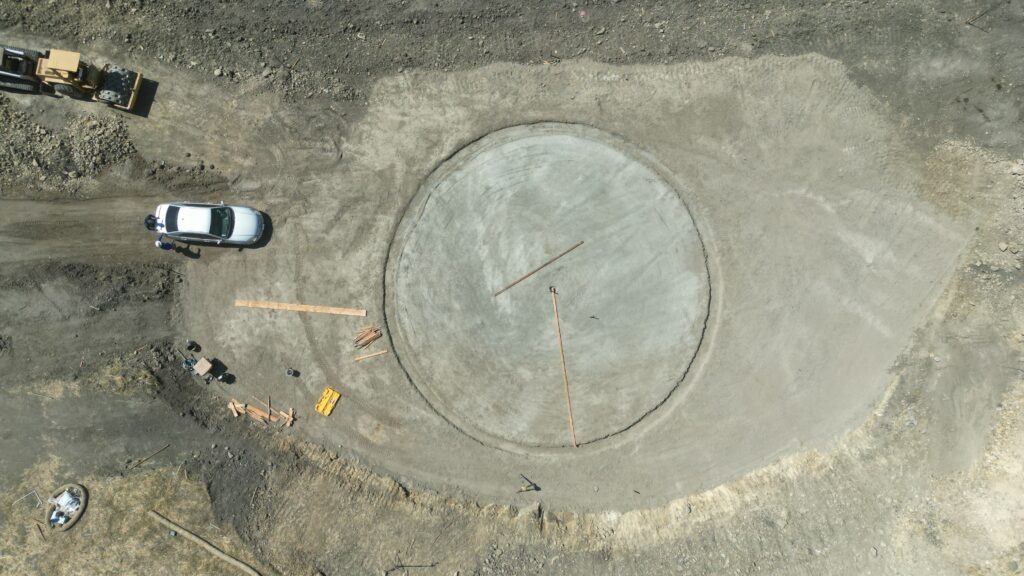
We used a center-pivot arm to lock in the radius and ensure the ring remained true. That’s how you avoid waves, flat spots, and all the little imperfections that become big problems later.
Pour Day — Placing and Finishing the Concrete Ring
Pour days on hillsides are always a mix of timing, communication, and just straight hustle.
Concrete Delivery and Access
The trucks had to make a tight climb up the hill. Once they were staged, we kept the mud moving so the ring set up evenly.
Vibration, Leveling, and Finishing
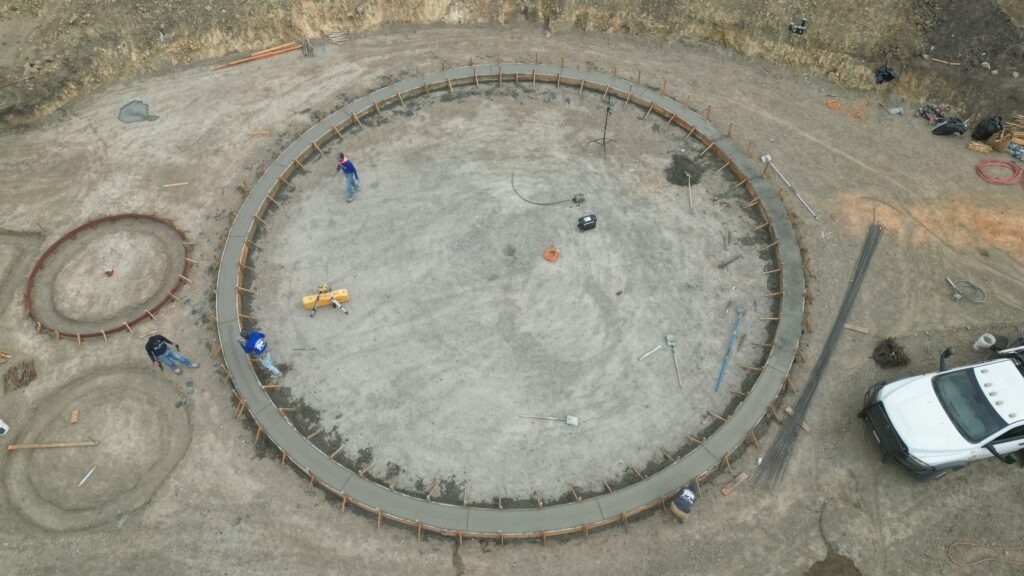
We vibrated every section, tied in the finish, and checked elevation as we went around the perimeter. A foundation this size can’t have dips or high spots.
Curing and Final Inspection
After the pour, we returned to strip the forms, clean up, and ensure the entire surface and ring were properly cured. What you see now is a clean, even, structural tank pad ready for installation.
Additional Tank Pads and Utility Foundations
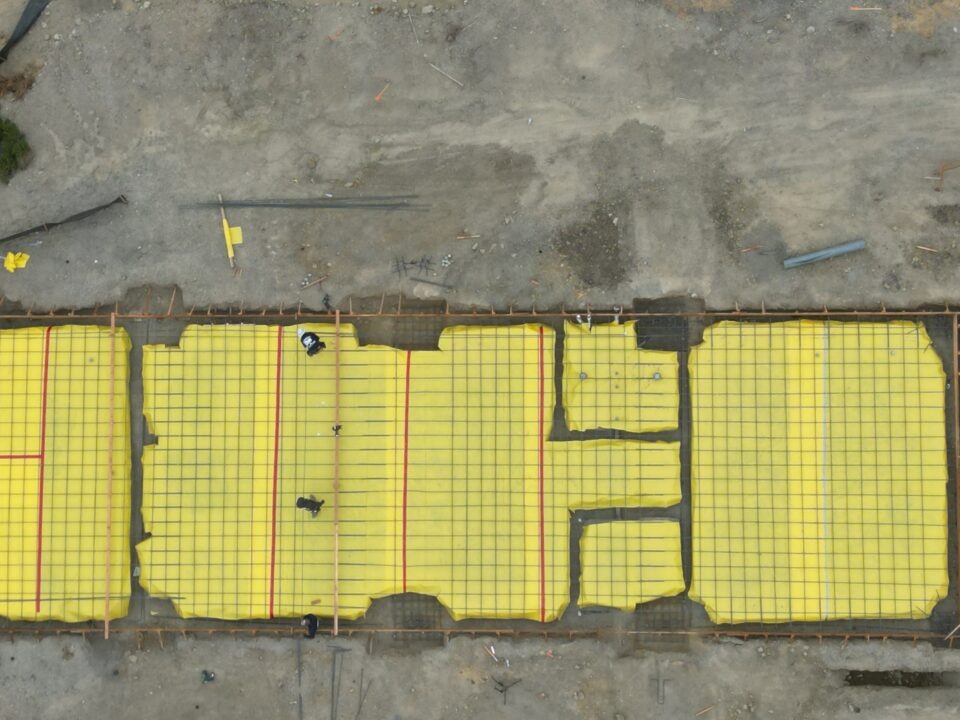
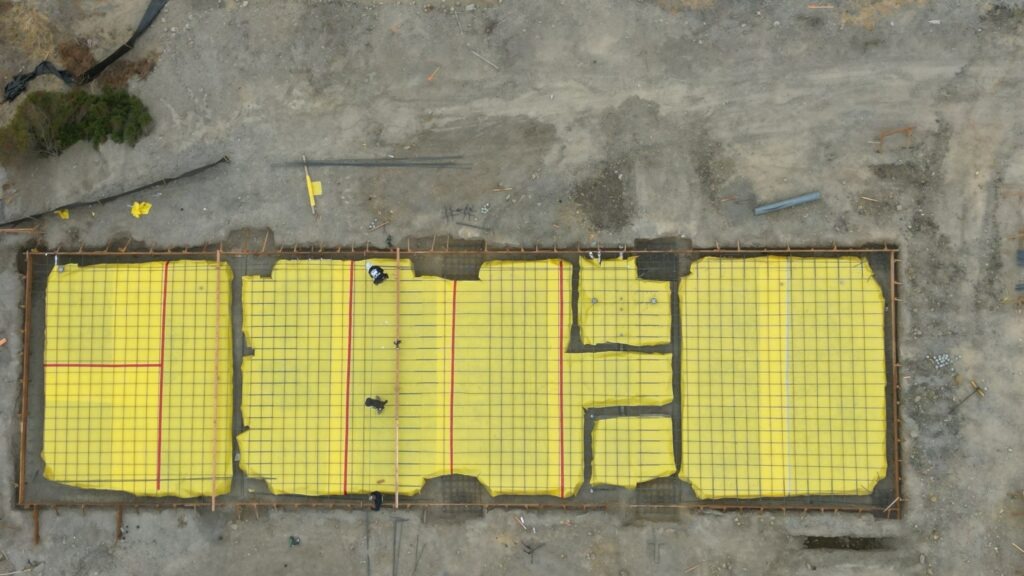
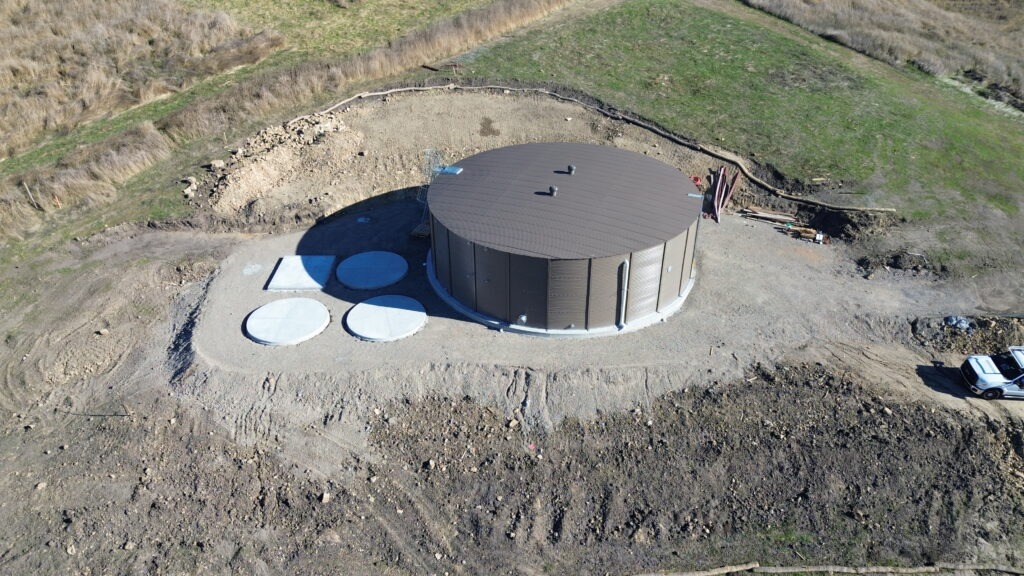
This site included more than just the main tank ring. We also formed and poured the three additional tank accessory pads that sit in front of the primary foundation.
Layout, Forming, and Pour Sequence
Each pad needed its own reinforcement, alignment, and elevation checks. Even though they’re smaller, they still integrate with the overall system.
How Everything Works Together
Once the tank is assembled, all four pads function as a complete system — access, utilities, overflow, and maintenance.
The Views Don’t Hurt Either
Milpitas hills give you that backdrop where you can see the entire valley — San Jose, the back side of Fremont, the freeways winding through. It’s the type of scenery that makes those long days worth it.
You’ll see it in the drone shots: prominent open hillside, blue skies, and a clean slab sitting right where it belongs.
What We See in the Field vs. What’s on Paper
Plans always give you the clean version — straight lines, perfect curves, zero surprises. But out here in the hills of Milpitas, the ground tells its own story. Every cut, every grade adjustment, every form we set must respond to what the site actually provides.
The engineer gives the design. We bring it to life.
And with a project like this — a massive 209,000-gallon tank, tight hillside access, and a curve you can’t cheat — communication with the client and the inspectors is everything. We made adjustments where needed, kept everyone in the loop, and delivered a foundation that’s built to last.
Everyone sees the finished foundation, but they don’t see the conversations, the layout checks, the back-and-forth that makes it all come together. That’s the part we take seriously. We stay ahead of the details so the client doesn’t have to worry. By the time we’re done, the tank installers can show up and get to work with confidence.
Schedule online ⏩
https://tinyurl.com/AllAccessEstimates
Call/text: 510-804-4646