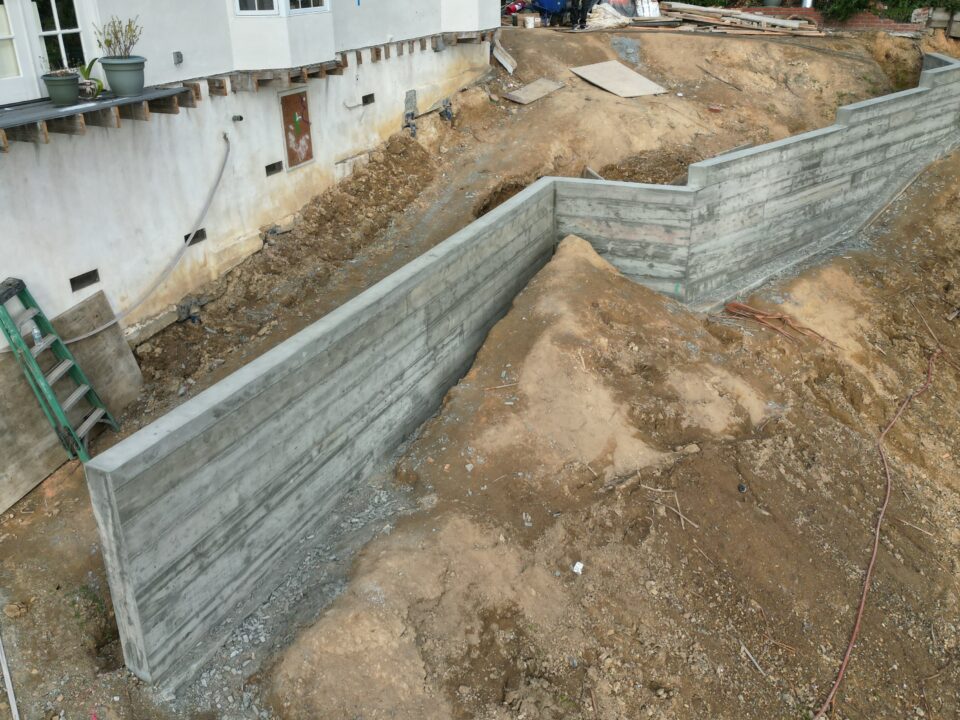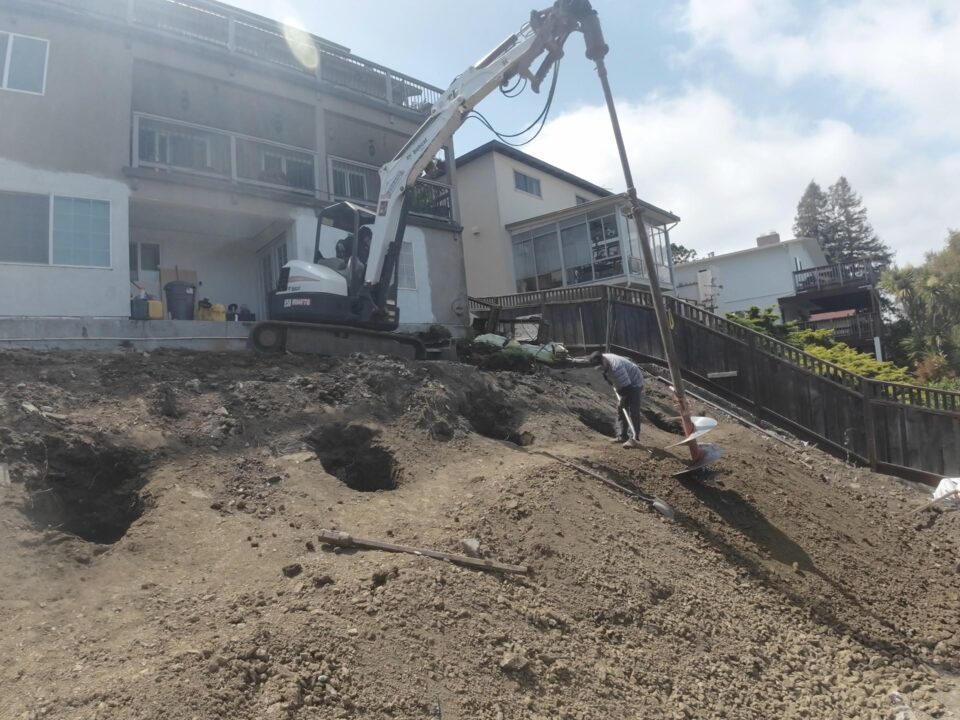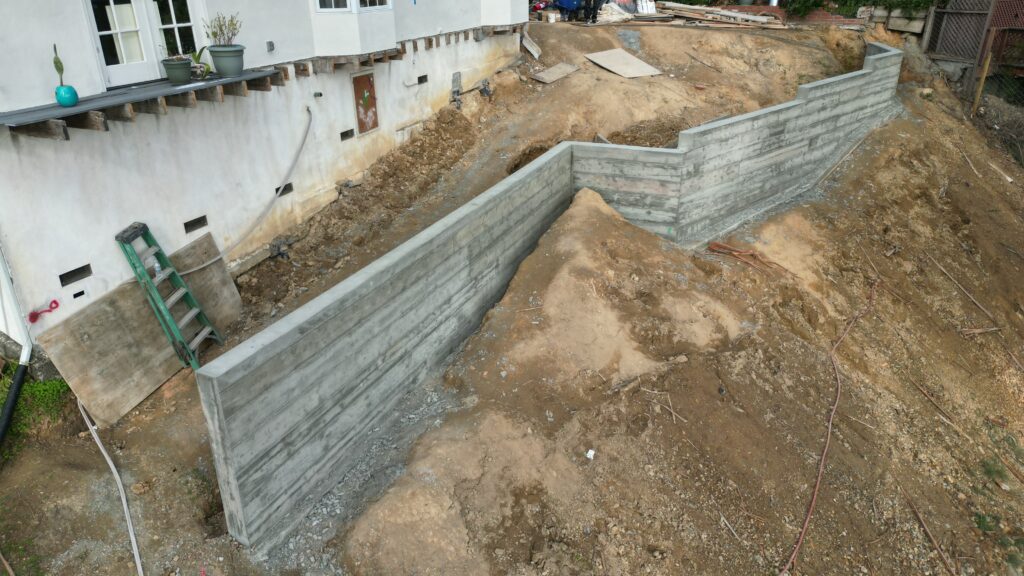
Concrete Retaining Wall using 2*12’s
If you live in Walnut Creek or anywhere in the East Bay — Lafayette, Pleasant Hill, Concord — you already know how these hills can get. One wrong move, the water has nowhere to go, and suddenly that old retaining wall behind your yard starts leaning, cracking, or just giving up.
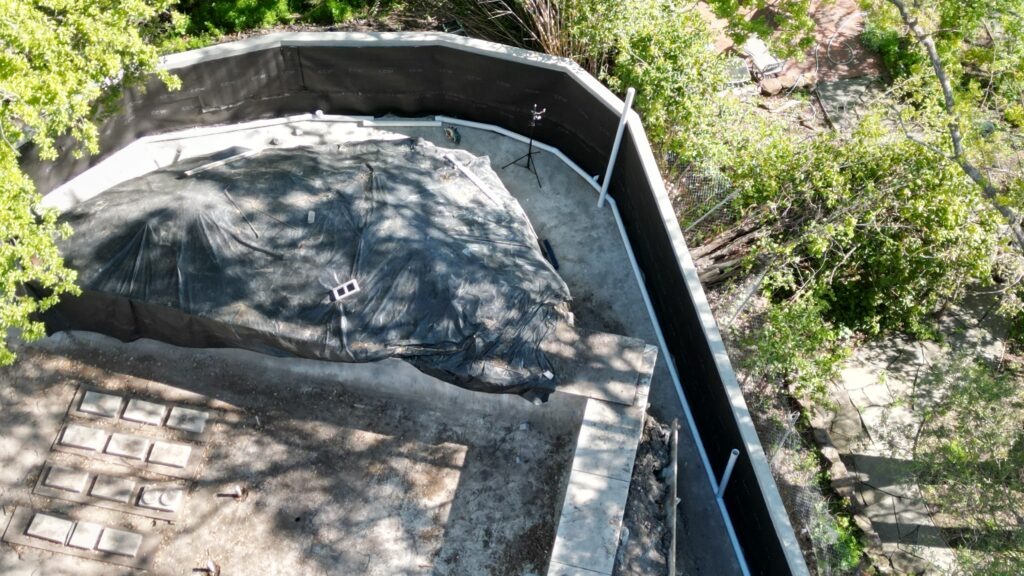
That’s exactly what happened on this project. The homeowner had a brand-new swimming pool installed first… but the retaining wall behind it was old, tired, and ready to call it quits. Usually, we build the wall before the pool — but sometimes you walk into a job and you’ve just got to take the conditions as they are and make it work.
Project Overview — Rebuilding a 90-Foot Structural Retaining Wall
This job was all about doing things backwards and still doing it right.
The pool was already finished. The wall behind it? Leaning, failing, and definitely not something you want holding back a hillside.
So we:
- Demo’d the old failing wall
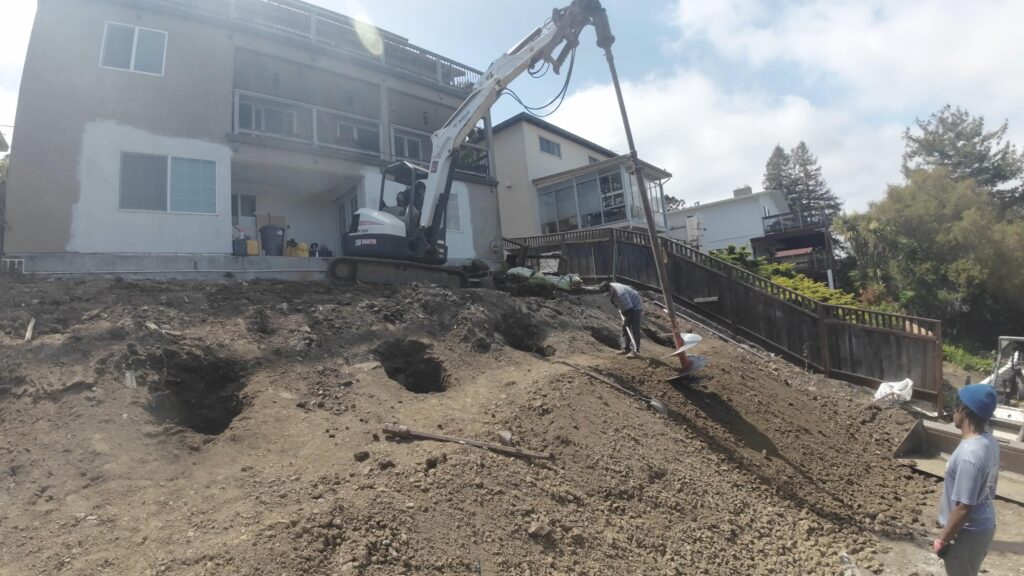
- Opened everything up safely without disturbing the new pool
- Installed proper drainage so the new wall wouldn’t go through the same problems
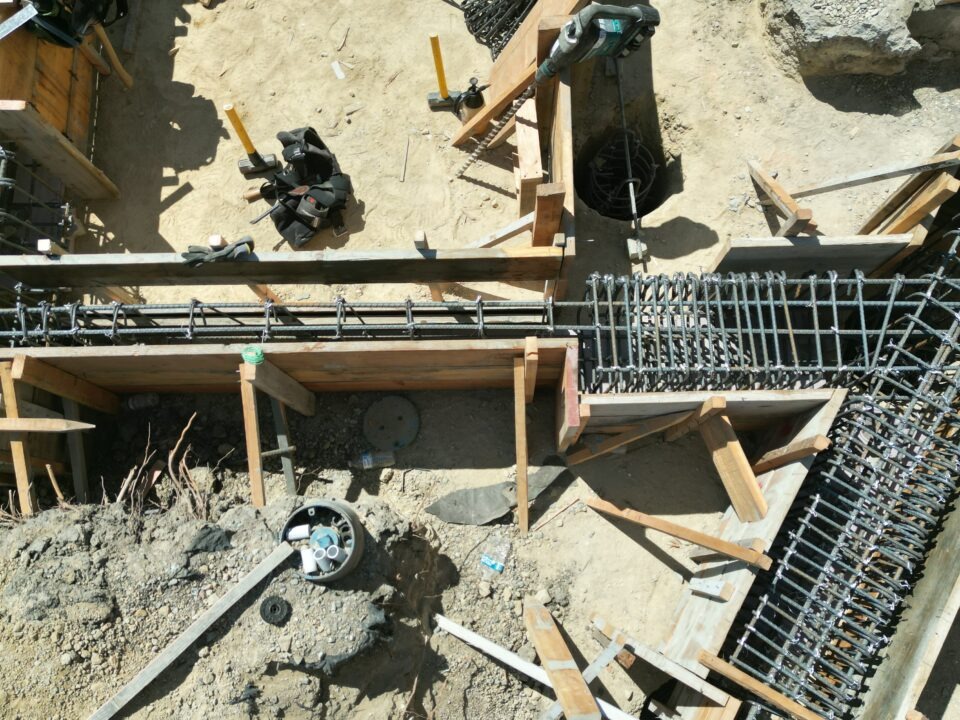
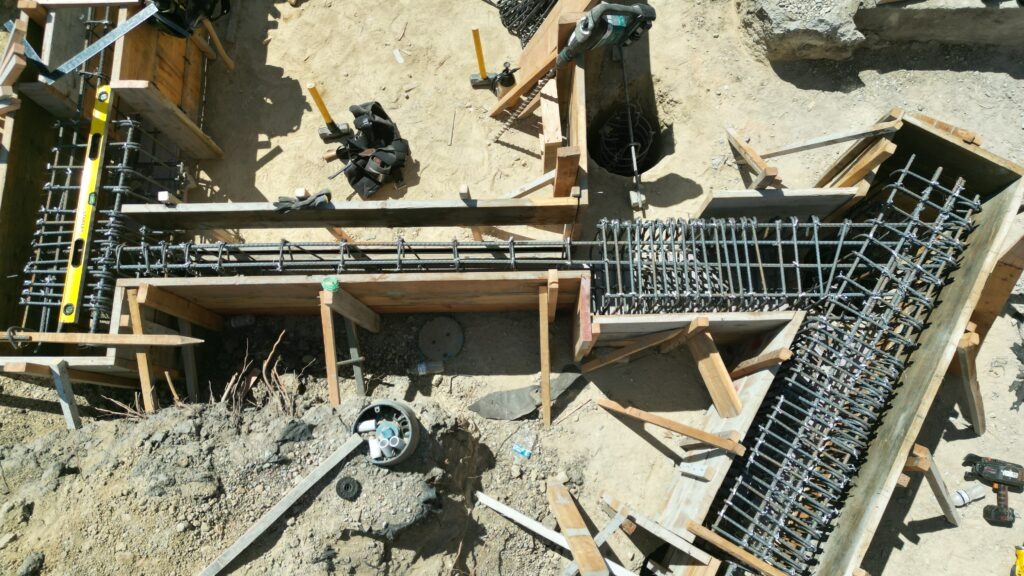
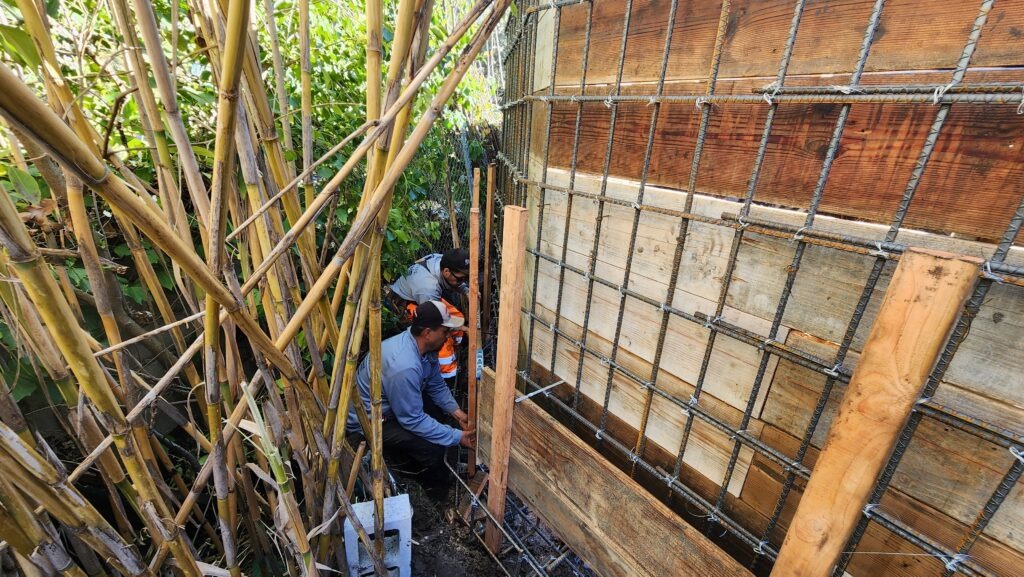
- Set the correct rebar layout for a true structural retaining wall
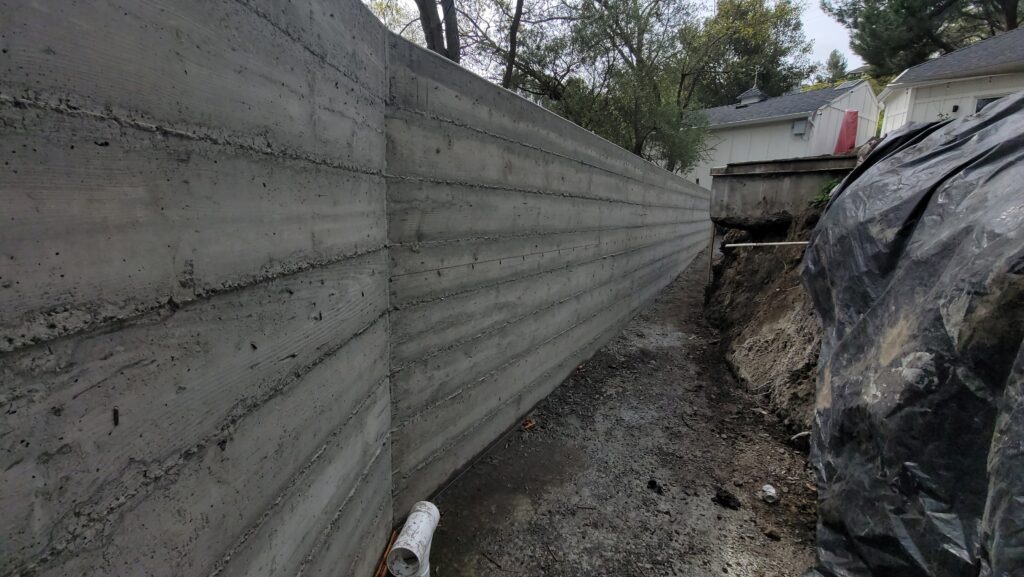
- Poured everything clean and tight so the wall ties into the landscape naturally
If you’re from the East Bay, you know Walnut Creek soil can be unpredictable — sometimes it’s clay, sometimes it’s rock — but drainage is always the key. We built the wall to relieve that pressure, protect the new pool, and give the homeowner confidence the whole yard is actually supported the way it should be.
Watch the Full Project Breakdown
See the full shot-by-shot walkthrough here:
Video: https://bit.ly/WalnutCreekRetainingWall
Full Project Photos:
https://tinyurl.com/WalnutCreekRetainingWall
Why Walls Like This Fail (and How We Fix Them)
Most retaining walls fail for the same few reasons:
Drainage Isn’t Set Up Right
If water can’t escape behind the wall, it builds pressure. Pressure wins every time.
Rebar Layout Is Wrong
A wall behind a pool needs structure — not just blocks stacked up.
Old Walls Built for Landscaping, Not Structure
A lot of older East Bay homes have “decorative” walls trying to do structural work. Never ends well.
The Sequence Was Out of Order
You normally build the retaining wall before you build a pool.
But hey — sometimes we walk in after the fact and do it in reverse.
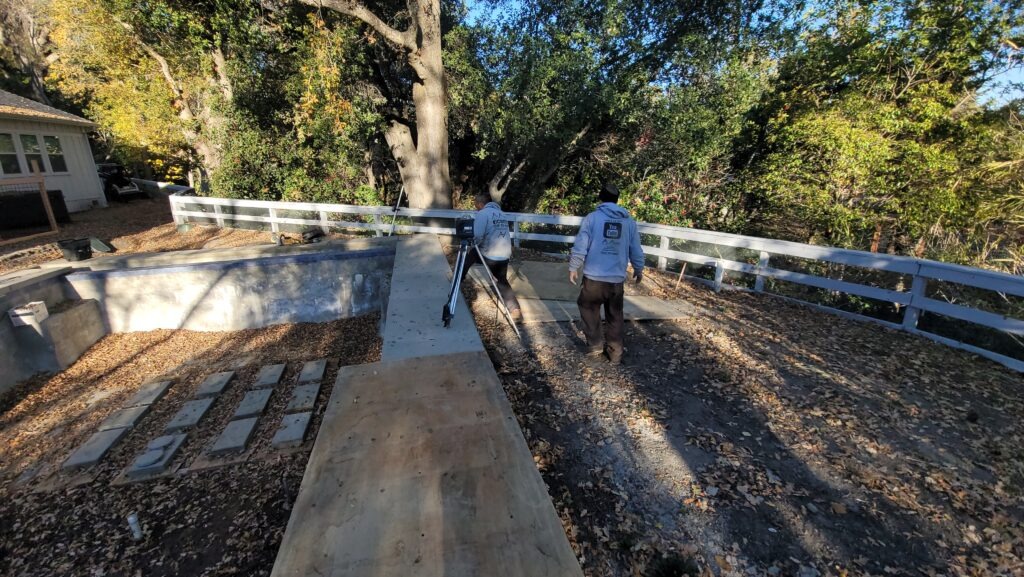
That’s what made this job unique: we had to protect the brand-new pool during demo, excavation, drainage install, and the new pour.
How We Built the New Retaining Wall
Here’s the quick rundown:
- Safe demo around a finished pool
- Additional excavation to expose the failure points
- Drainage fabric, pipe, rock — the whole setup
- Structural rebar cage tied correctly
- Forms built tight to run a clean 90-foot wall
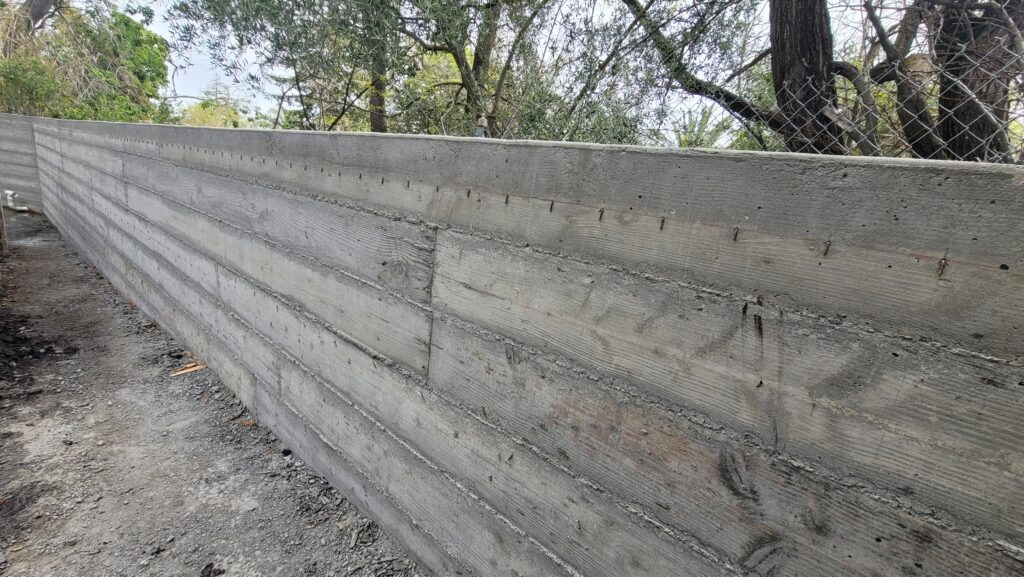
- A smooth concrete pour with solid finish work
When everything was done, the pool finally had the support it should have had from day one.
Serving Walnut Creek and the East Bay
We build retaining walls in Walnut Creek, Lafayette, Concord, Pleasant Hill, Orinda, and the surrounding hillside neighborhoods.
Every area has its own soil, its own drainage quirks, and its own engineering needs, but the formula never changes:
proper rebar, proper drainage, and respecting the hillside.
What We See in the Field vs. What’s on Paper
Every project teaches you something — and this Walnut Creek job was a reminder that plans don’t always match real-world conditions.
On paper, this should’ve been a straightforward structural retaining wall.
But in the field?
We walked into a brand-new pool with an old wall that should’ve been replaced first. So the sequence got flipped, and we had to work around a finished pool without causing any damage. That meant tighter access, more controlled demo, and being a lot more precise with drainage placement and rebar layout.
These are the things homeowners never see on paper — the behind-the-scenes adjustments that make the whole project come together.
And honestly, that’s where our experience shows. We’ve been doing hillside retaining walls across the East Bay for 20+ years, so when something comes up in the field, we already know how to pivot and keep the job moving while staying structurally sound.